
What sunscreen do Tour de France riders use?
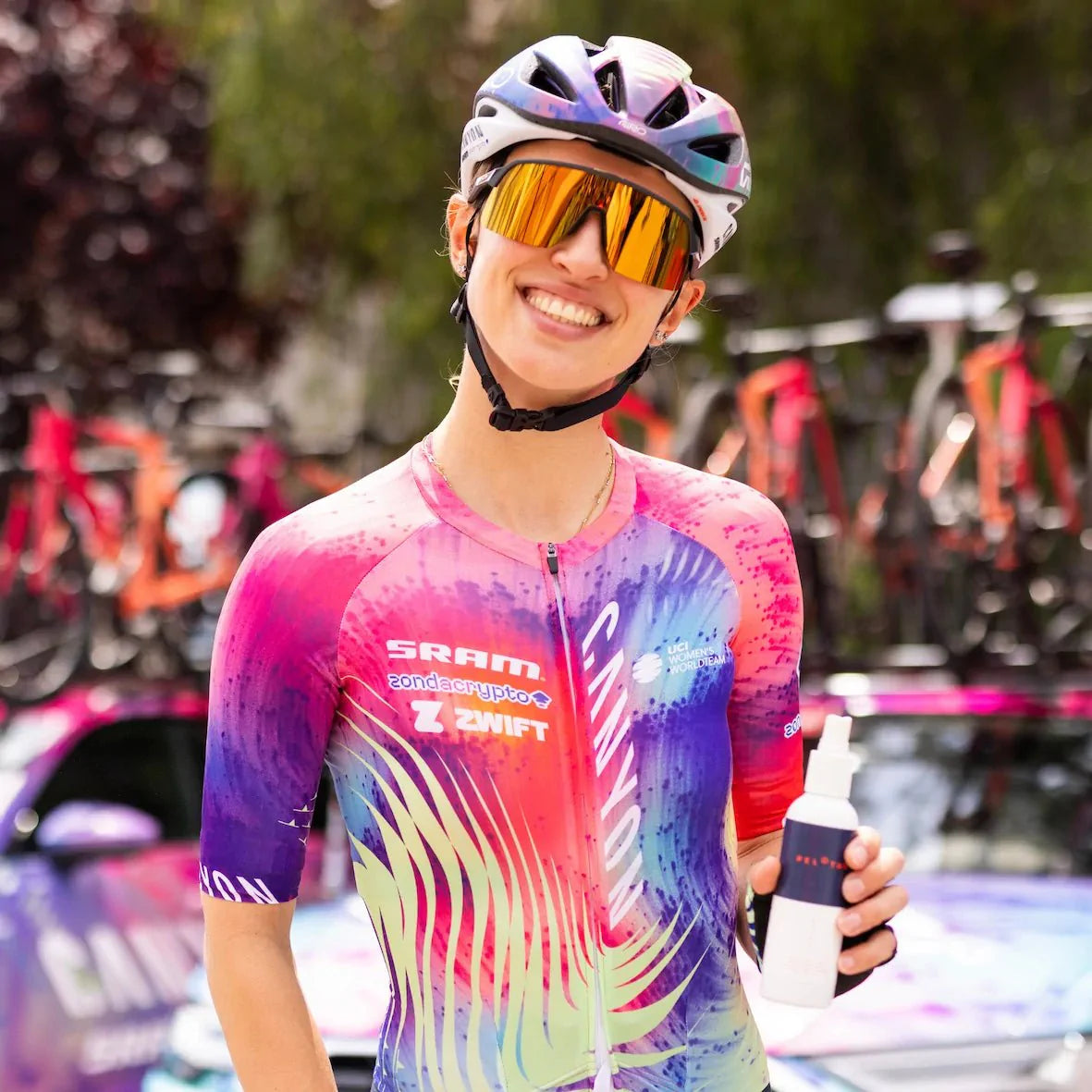
Most riders in the Tour de France apply Pelotan. As the Official Product of the Tour de France and the Official Sun Protection partner of teams across the men's and women's races, including UAE Team Emirates, EF Pro Cycling, Canyon-SRAM, EF Cannondale Oatly and FDJ-SUEZ, Pelotan is the SPF the peloton reaches for before every stage start. A sweatproof, water-resistant sunscreen built for racing rather than the beach.
See the UV Load of every stage ↓
The women's Tour, every stage scored.
The Tour de France Femmes avec Zwift, scored the same way as the men's. Nine stages, 1 to 9 August, Switzerland to Nice over the summit of Mont Ventoux. Here is the complete record.
Serious, biologically significant UV stress.
Across all nine stages the 2026 Femmes averaged a UV Load of 70. Take out the two short-exposure days, the stage 4 time trial and the twilight finale into Nice, and the seven road and mountain stages averaged 84, right at the top of the High band. Mont Ventoux hit 94, the highest UV Load we have recorded at this race.
0-10
11-30
31-60
61-85
86-95
96-100
For scale: the 2025 Femmes averaged a UV Load of 74 across the road stages, and the mountain day to the Col de la Madeleine hit 93 (Serious).
| Stage | Date | Route | UV Load | Avg UV Index | Temp |
|---|---|---|---|---|---|
| 1 | 1 Aug | Lausanne to Lausanne | 62 | 3.65 | 29.2°C |
| 2 | 2 Aug | Aigle to Geneva | 81 | 5.34 | 32.8°C |
| 3 | 3 Aug | Geneva to Poligny | 84 | 5.58 | 33.0°C |
| 4 | 4 Aug | Gevrey-Chambertin to Dijon (ITT) | 24 | 6.83 | 34.0°C |
| 5 | 5 Aug | Macon to Belleville-en-Beaujolais | 84 | 5.07 | 31.4°C |
| 6 | 6 Aug | Montbrison to Tournon-sur-Rhone | 92 | 6.55 | 28.3°C |
| 7 | 7 Aug | Voulte-sur-Rhone to Mont Ventoux | 94 | 6.72 | 31.6°C |
| 8 | 8 Aug | Sisteron to Nice | 89 | 6.11 | 33.2°C |
| 9 | 9 Aug | Nice to Nice | 21 | 0.94 | 31.7°C |
Swipe the table sideways to see every stage
1,175 km and nearly 19,000 m of climbing, the longest and hardest Tour de France Femmes yet.
Track your own UV Load.
Every outdoor session gets a UV Load score in the app, the same metric the peloton uses. Free on iPhone and Android.

The men's Tour, every stage scored.
UV Load is our 0–100 score for how much sun strain a stage puts on a rider. We scored every stage of the 2026 men's Tour de France, live. Here is the complete record.
Serious, biologically significant UV stress.
Across all 21 stages, the 2026 men's Tour averaged a UV Load of 75. High, reached through the hottest opening we have tracked, with a peak of 98.
0–10
11–30
31–60
61–85
86–95
96–100
For scale: most people sit in Low to Moderate on a summer's day. The 2025 Tour averaged 78 (High), and its hardest mountain stages hit 96 (Extreme), a level very few ever reach.
| Stage | Date | Route | UV Load | Avg UV Index | Temp |
|---|---|---|---|---|---|
| 1 | 4 Jul | Barcelona (TTT) | 15 | 4.85 | 31.3°C |
| 2 | 5 Jul | Tarragona → Barcelona | 90 | 6.61 | 32.1°C |
| 3 | 6 Jul | Granollers → Les Angles | 98 | 9.32 | 32.1°C |
| 4 | 7 Jul | Carcassonne → Foix | 93 | 6.91 | 34.2°C |
| 5 | 8 Jul | Lannemezan → Pau | 84 | 5.70 | 34.0°C |
| 6 | 9 Jul | Pau → Gavarnie-Gèdre | 95 | 7.34 | 31.0°C |
| 7 | 10 Jul | Hagetmau → Bordeaux | 59 | 5.56 | 35.2°C |
| 8 | 11 Jul | Périgueux → Bergerac | 89 | 6.79 | 37.7°C |
| 9 | 12 Jul | Malemort → Ussel | 87 | 6.62 | 37.0°C |
| Rest day · 13 July · Cantal | |||||
| 10 | 14 Jul | Aurillac → Le Lioran | 94 | 7.85 | 31.3°C |
| 11 | 15 Jul | Vichy → Nevers | 63 | 4.76 | 34.2°C |
| 12 | 16 Jul | Nevers Magny-Cours → Chalon-sur-Saône | 68 | 3.99 | 33.0°C |
| 13 | 17 Jul | Dole → Belfort | 90 | 5.99 | 26.9°C |
| 14 | 18 Jul | Mulhouse → Le Markstein Fellering | 70 | 3.73 | 24.4°C |
| 15 | 19 Jul | Champagnole → Plateau de Solaison | 87 | 6.27 | 25.6°C |
| Rest day · 20 July · Haute-Savoie | |||||
| 16 | 21 Jul | Évian-les-Bains → Thonon-les-Bains (ITT) | 31 | 7.70 | 23.8°C |
| 17 | 22 Jul | Chambéry → Voiron | 89 | 7.03 | 26.5°C |
| 18 | 23 Jul | Coiron → Orcières-Merlette | 82 | 6.60 | 26.2°C |
| 19 | 24 Jul | Gap → Alpe d'Huez | 87 | 6.78 | 28.5°C |
| 20 | 25 Jul | Le Bourg d'Oisans → Alpe d'Huez | 94 | 7.28 | 23.1°C |
| 21 | 26 Jul | Thoiry → Paris Champs-Élysées | 4 | 0.72 | 25.1°C |
Swipe the table sideways to see every stage →
Reference: the 2025 Tour totalled 411 SED at an average UV Load of 78.
Three weeks. Nowhere to hide.
Twenty-one stages. Four to six hours a day in open sun, at altitude, with nowhere to hide.
In 2025 the peloton absorbed 411 SED of UV across the race. SED is the standard scientific unit for cumulative UV exposure. To put 411 in context, that's about as much UV as the average person in Denmark gets in a full year, and the riders took it in 21 racing days.
We measure that exposure with UV Load, a 0–100 score that does for sun what a training-stress score does for the legs. It turns an invisible dose into a number you can actually see.
UV is a performance problem, not just a skin one.
Most people file sunscreen under health. For an athlete, UV is closer to a training variable, because the research shows it affects output directly.
Sun exposure brings on fatigue faster, even when heat is held constant (Oksa et al., 2012). Sunburnt skin loses more water and sweats less efficiently, which works against hydration on exactly the days you can least afford it (Dengel et al., 2011). And a sunburn competes with your muscles for the immune and repair resources that recovery depends on, so the damage done on stage 6 is still being paid for on stage 9 (Downs et al., 2020). Layer on the oxidative stress and inflammation UV drives (Martarelli et al., 2022), and you have a load that quietly stacks up across a stage race.
You don't feel it on the day. You feel it three days later, in legs that don't come back the way they should.
Two years in the making, with the best in the sport.
We didn't build UV Load in a lab and hope. We've spent the past two years developing and refining it with some of the best cyclists in the sport, and it's now part of how the world's top athletes manage their performance protocol, the same way they manage training load and recovery.
The Tour is where it gets its hardest test.
Starting in the worst of it.
This year's Grand Départ is in Barcelona on 4 July, and Spain is in the middle of a severe heatwave. The city has activated its Heat Plan.
This isn't a local hot spell. A heat dome has been parked over Europe for weeks. France recorded its hottest day ever on 24 June, with Paris passing 40°C, and forecasters expect a second dome to build over western Europe from around 7 July, pushing parts of France into the low-to-mid 40s. That's exactly when the race crosses the Pyrenees and turns north through the country.
By stage 3 the peloton is in the mountains, and the final weekend climbs Alpe d'Huez twice. Clear skies, high sun, altitude. The conditions that drive UV Load to its highest.
A quick, honest distinction, because it matters. Heat and UV are two different loads. Sunscreen protects against UV, not heat illness, and this summer's heat is a serious public-health issue across Spain and France, not a marketing line. What we track is the UV half of that equation, the part nobody else is measuring. And this year, in these conditions, it's going to be exceptional.
What the teams actually do about it.
Pelotan isn't a race-day decision made by looking at the sky. It goes in the soigneur's kit bag alongside the bottles and the race food, and it goes on before every stage, grey morning or blue. One application of Pelotan lasts up to 8 hours, so a single pass before the riders roll out covers a full stage. No stopping, no fuss. UV comes through cloud, and a four-hour ride still adds to the total.
That's why the soigneurs at UAE Team Emirates and EF Pro Cycling treat Pelotan the way they treat nutrition and hydration. Not a nice-to-have. Part of the protocol.
That's the habit worth stealing. The best teams in the world don't skip the one variable most riders never think about.
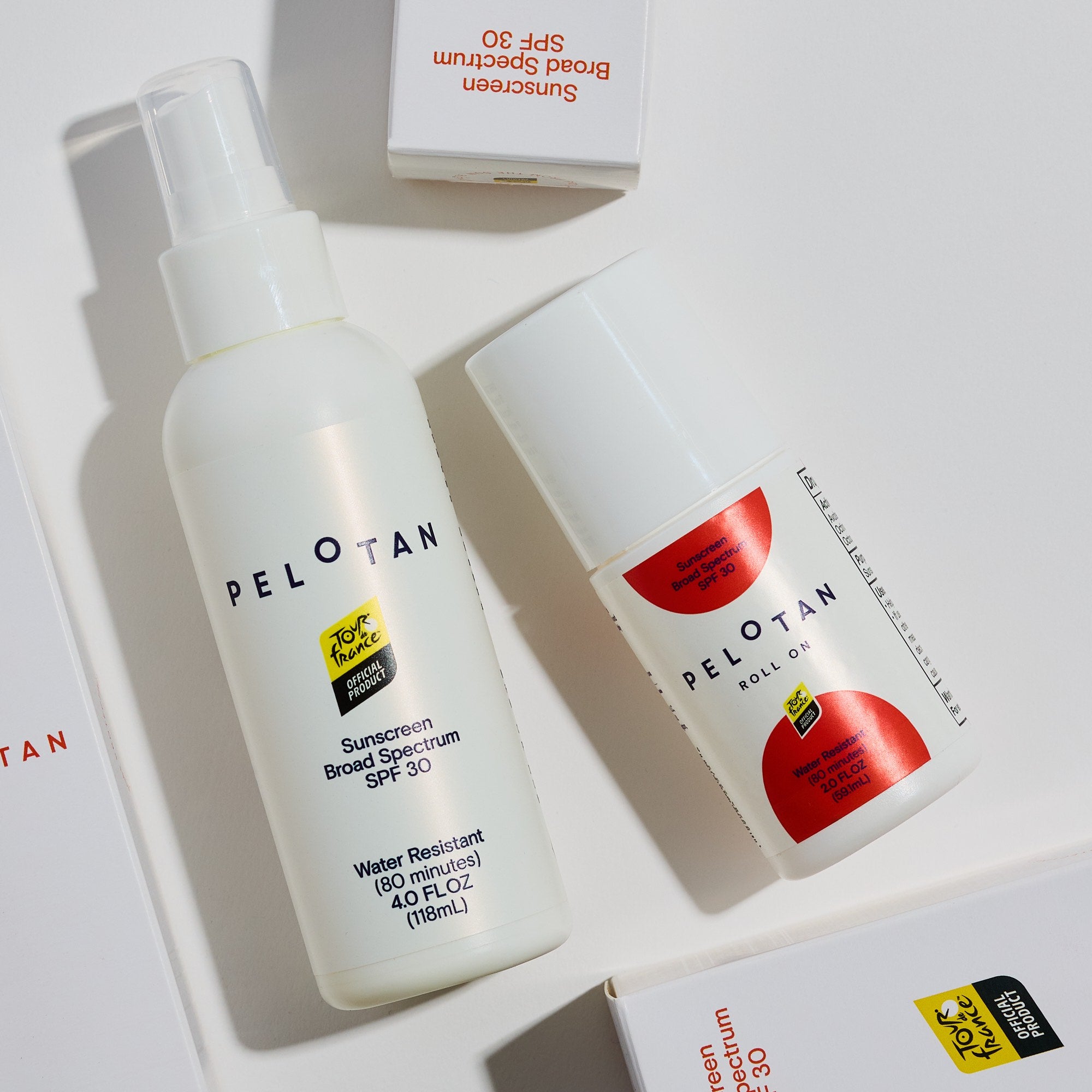
Pelotan SPF 30.
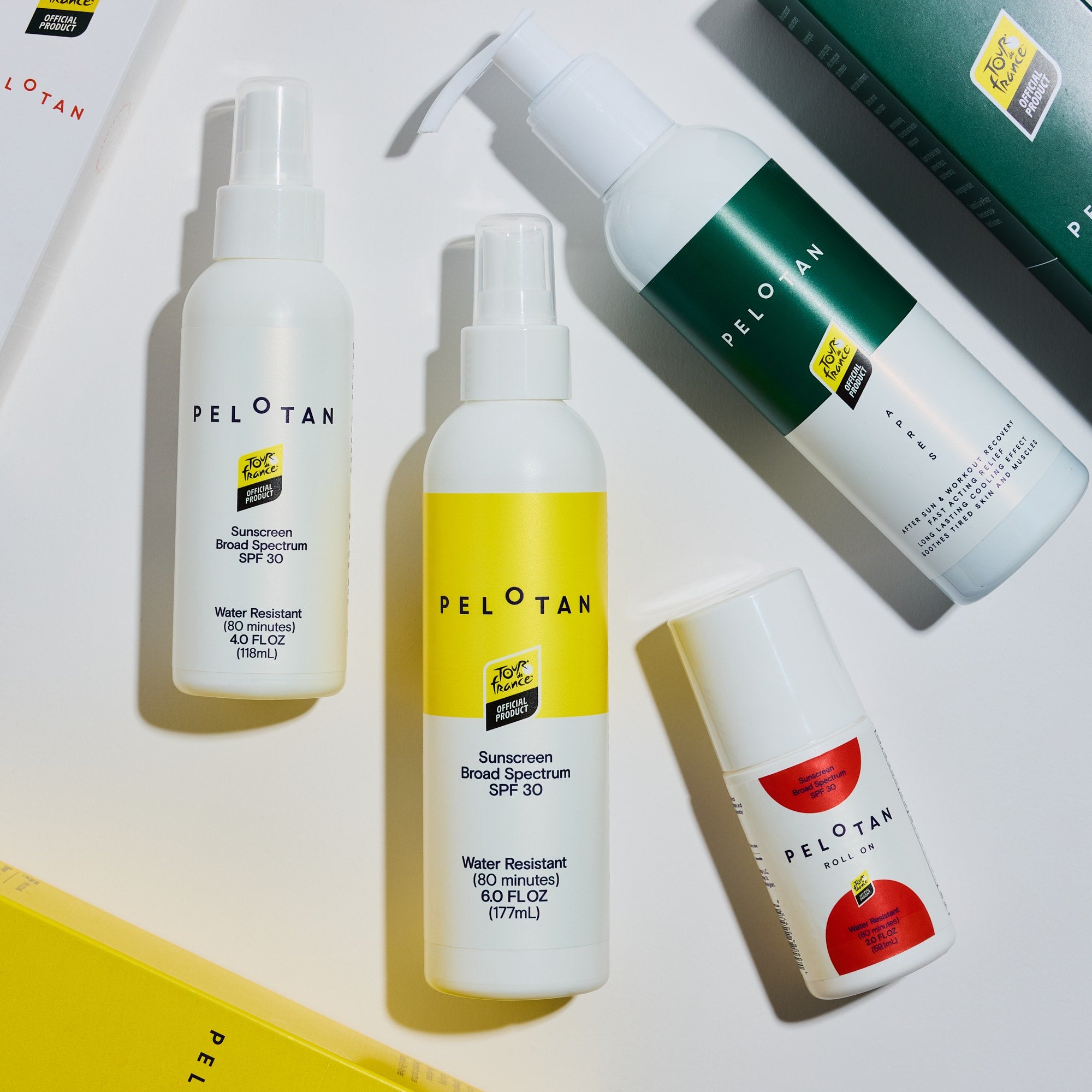
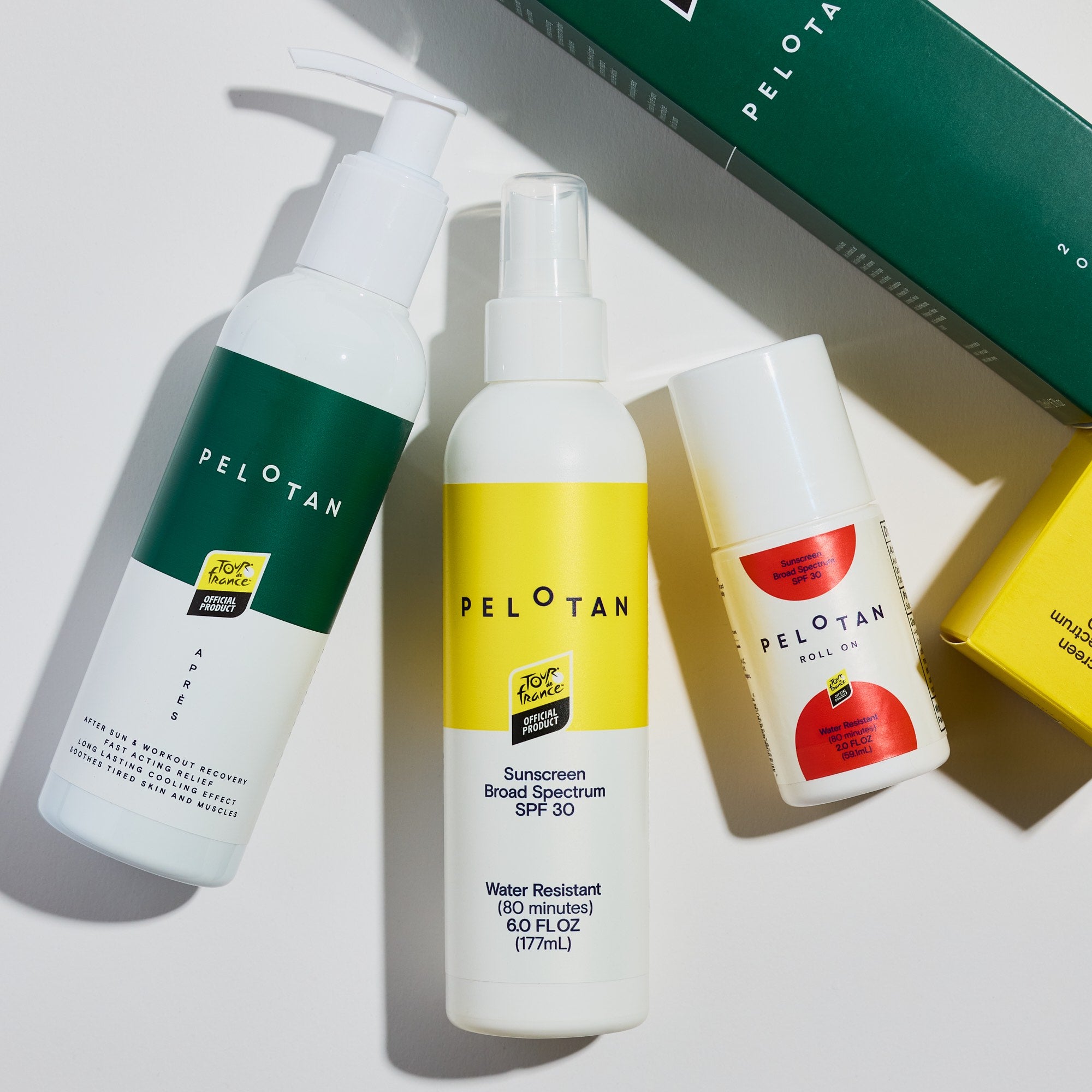
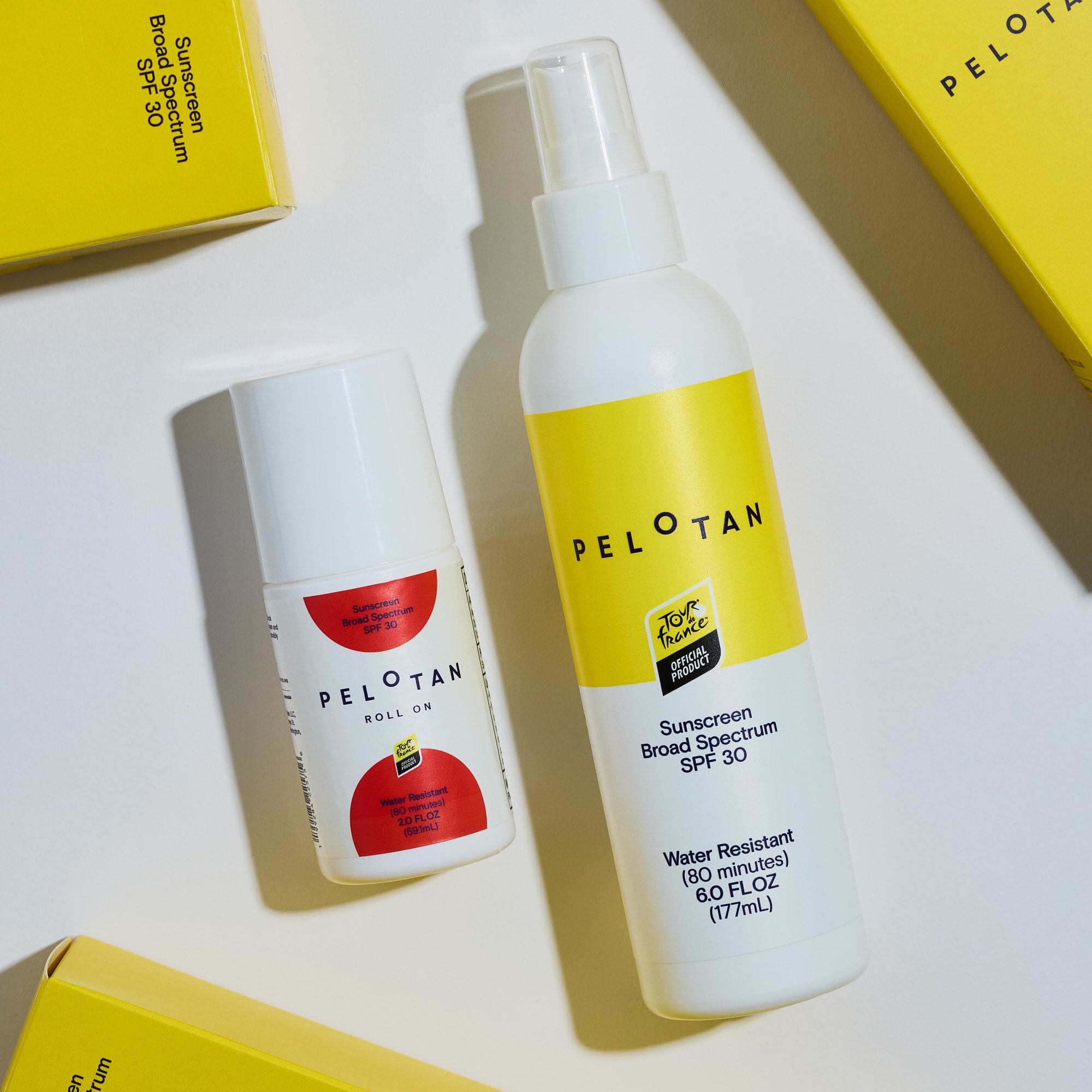
Riders apply Pelotan before every stage. With maximum FDA water and sweat resistance (80 minutes), a single application holds through hours of racing and heavy sweat. On the toughest, hottest stages, it's not uncommon to see a Pelotan Roll-On passed from the team car for a quick top-up, easy reapplication with no sticky hands (in fact, Pelotan is also often in the Neutral Service car too!)
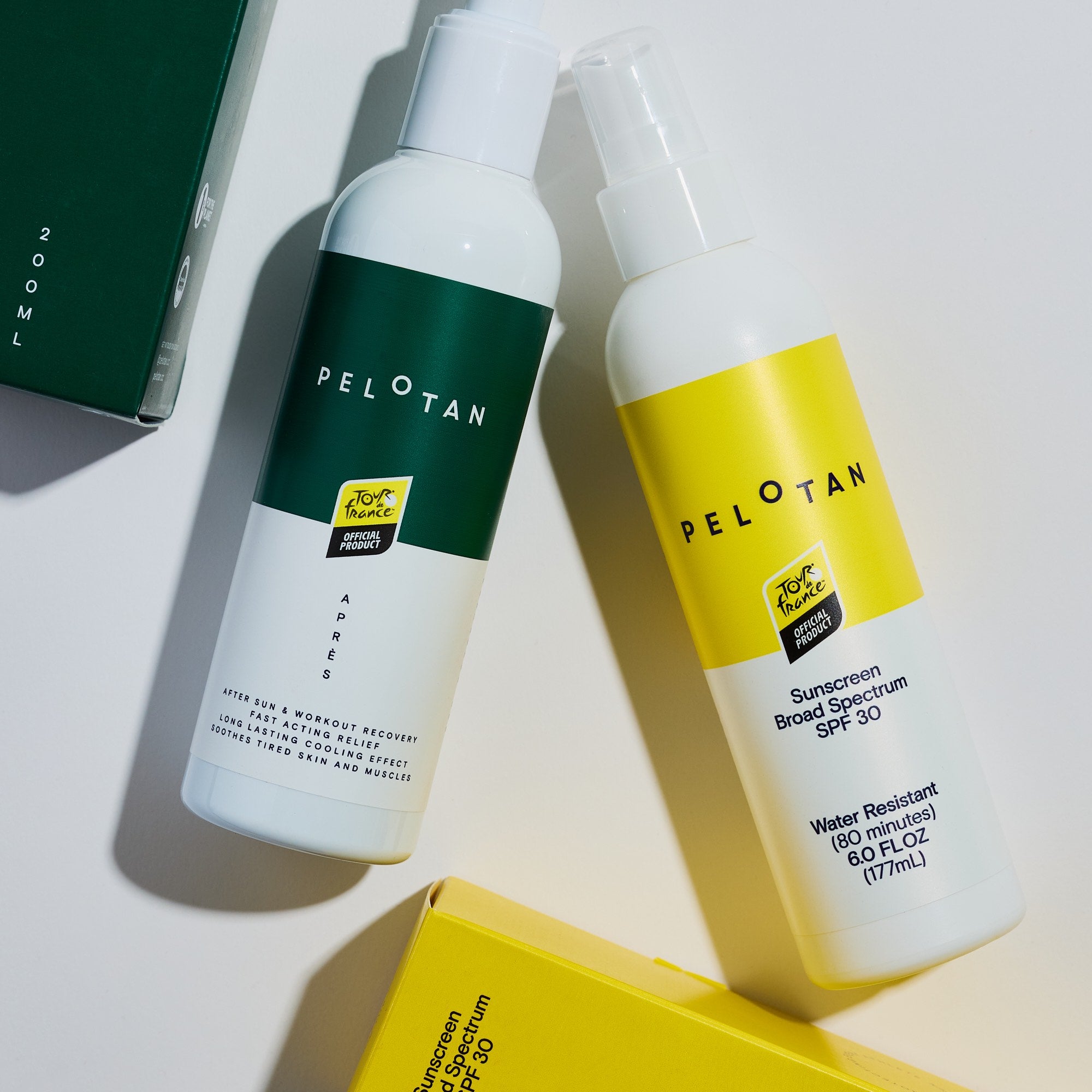
Built for race day. The same thing the peloton puts on before the Tour, you can put on before your Saturday ride.
The Official Tour de France Collection




Sunscreen and the Tour, answered.
Do Tour de France riders wear sunscreen?
Yes. Riders apply Pelotan before every stage. It's a standard part of the team routine, managed by the soigneurs alongside nutrition and hydration, because UV exposure across a three-week race has a measurable effect on fatigue and recovery.
What sunscreen do Tour de France teams use?
Pelotan is the Official Product of the Tour de France and the Official Sun Protection partner of UAE Team Emirates, EF Pro Cycling and more, so most riders in the race apply it.
What SPF do pro cyclists use?
Pelotan is SPF 30, formulated to stay effective through over long hours of racing rather than to sit heavy on the skin like a typical high-SPF beach product. It has the maximum FDA water and sweat resistance rating (80 minutes) and is specifically engineered for sports where your skin’s ability to breathe and sweat effectively is paramount.
How often do Tour de France riders apply sunscreen?
Riders apply Pelotan before every stage. With maximum FDA water and sweat resistance (80 minutes), a single application holds through hours of racing and heavy sweat. On the toughest, hottest stages, it's not uncommon to see a Pelotan Roll-On passed from the team car for a quick top-up, easy reapplication with no sticky hands (in fact, Pelotan is also often in the Neutral Service car too!)
Does sunscreen affect cycling performance?
The sunscreen itself is light and breathable and doesn't hinder performance. The bigger performance factor is the UV it blocks: unprotected sun exposure brings on fatigue faster, works against hydration, and slows recovery across a stage race.
How much UV does a Tour de France rider get?
In 2025 the peloton accumulated 411 SED across the race, at an average UV Load of 78 out of 100. That's roughly a full year of an average northern-European person's UV exposure, absorbed in 21 days of racing.